From Olive Waste to Renewable Energy: The Role of Anaerobic Digestion in the Circular Economy
Spain is the world’s largest producer of olive oil, with a strong concentration of activity in regions such as Andalusia and Extremadura. Alongside this leadership comes a significant challenge: the management of large volumes of agro-industrial by-products generated during the olive oil production process.
One of these by-products is alperujo, a semi-solid residue resulting from the two-phase extraction system, composed of olive pulp, skin, stone fragments and vegetation water. Traditionally considered a waste management problem, alperujo is now increasingly seen as avaluable resource within the framework of the circular economy.
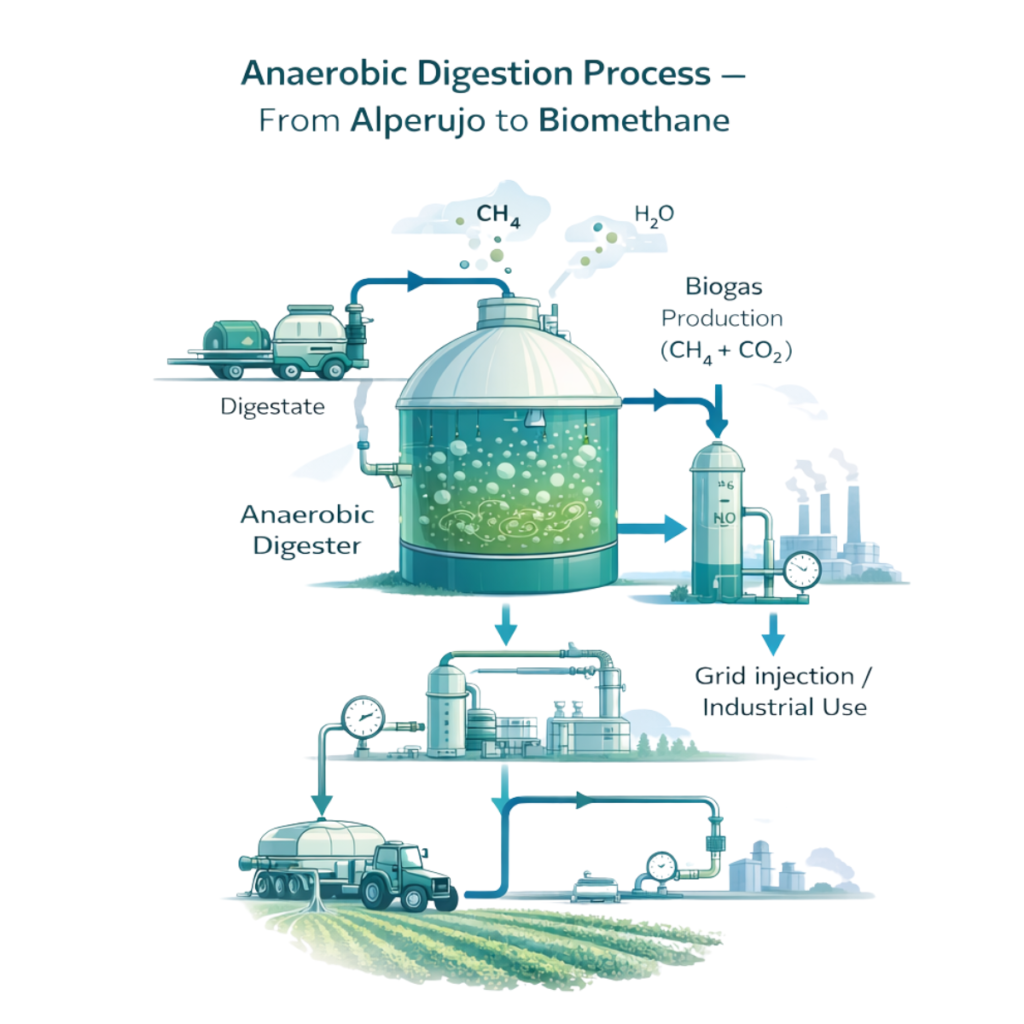
Alperujo has a high organic content, making it particularly suitable for anaerobic digestion, a biological process in which microorganisms break down organic matter in the absence of oxygen. This process produces biogas, which can be upgraded to biomethane, as well as a nutrient-rich digestate that can be reused as fertiliser.
Through anaerobic digestion, what was once an environmental burden can be transformed into:
Renewable energy
A reduction in greenhouse gas emissions
A useful by-product for agriculture
A more sustainable waste management model for the olive oil industry
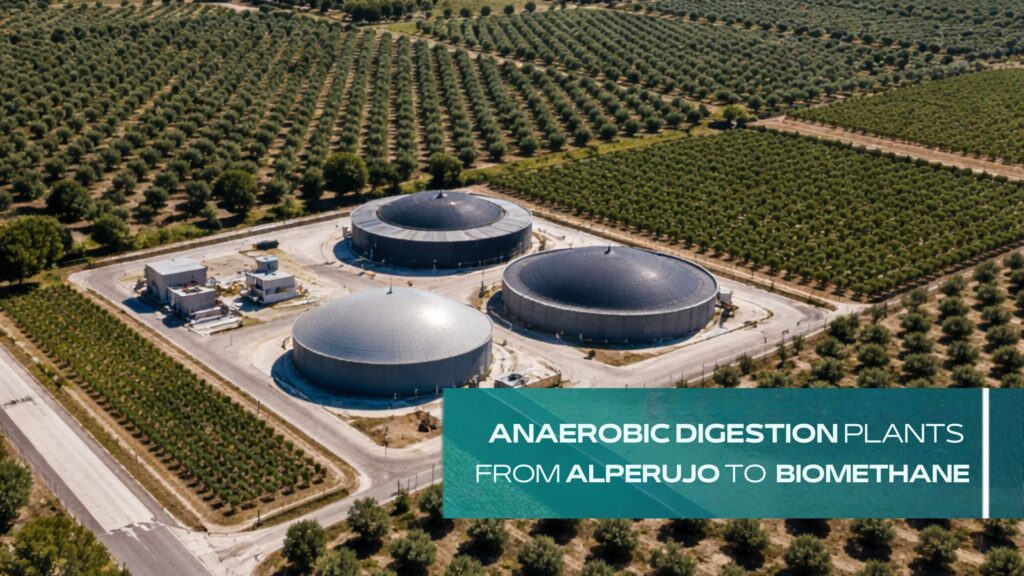
Anaerobic digestion applied to olive oil by-products
Digesting alperujo presents specific technical challenges due to its composition, including high concentrations of lipids and polyphenols. Over recent years, technological advances in pre-treatment, process control and co-digestion strategies have made it possible to optimise its conversion into energy at industrial scale.
Modern anaerobic digestion plants designed for agro-industrial residues integrate:
Advanced biological process control
Robust mechanical and electrical systems
Gas upgrading technologies for biomethane production
Strict environmental and safety standards
These facilities are increasingly being deployed close to olive oil production areas, reducing transport needs and reinforcing local energy generation.
A growing sector in southern Europe
With ambitious renewable energy and decarbonisation targets, Spain offers ideal conditions for the development of anaerobic digestion projects based on agricultural and agro-industrial residues. The olive oil sector, due to its scale and concentration, represents a particularly strong opportunity.
Dozens of new installations are expected in the coming years, especially in southern Spain, contributing to:
Energy transition goals
Rural economic development
Job creation for highly specialised engineers and technical professionals
Engineering at the core of the transition
The success of these projects relies on multidisciplinary engineering expertise, covering:
Process and project engineering
Planning and construction management
Mechanical, electrical and instrumentation systems
Operations, maintenance and commissioning
Anaerobic digestion of alperujo is a clear example of how engineering, sustainability and circular economy principles converge to create real industrial impact.
This article is based on publicly available institutional reports, scientific publications and industry references related to anaerobic digestion, olive oil by-products and renewable energy. Sources
IEA Bioenergy – Task 37 (Energy from Biogas) Technical reports on anaerobic digestion technologies, feedstock characteristics and biomethane upgrading. https://www.ieabioenergy.com