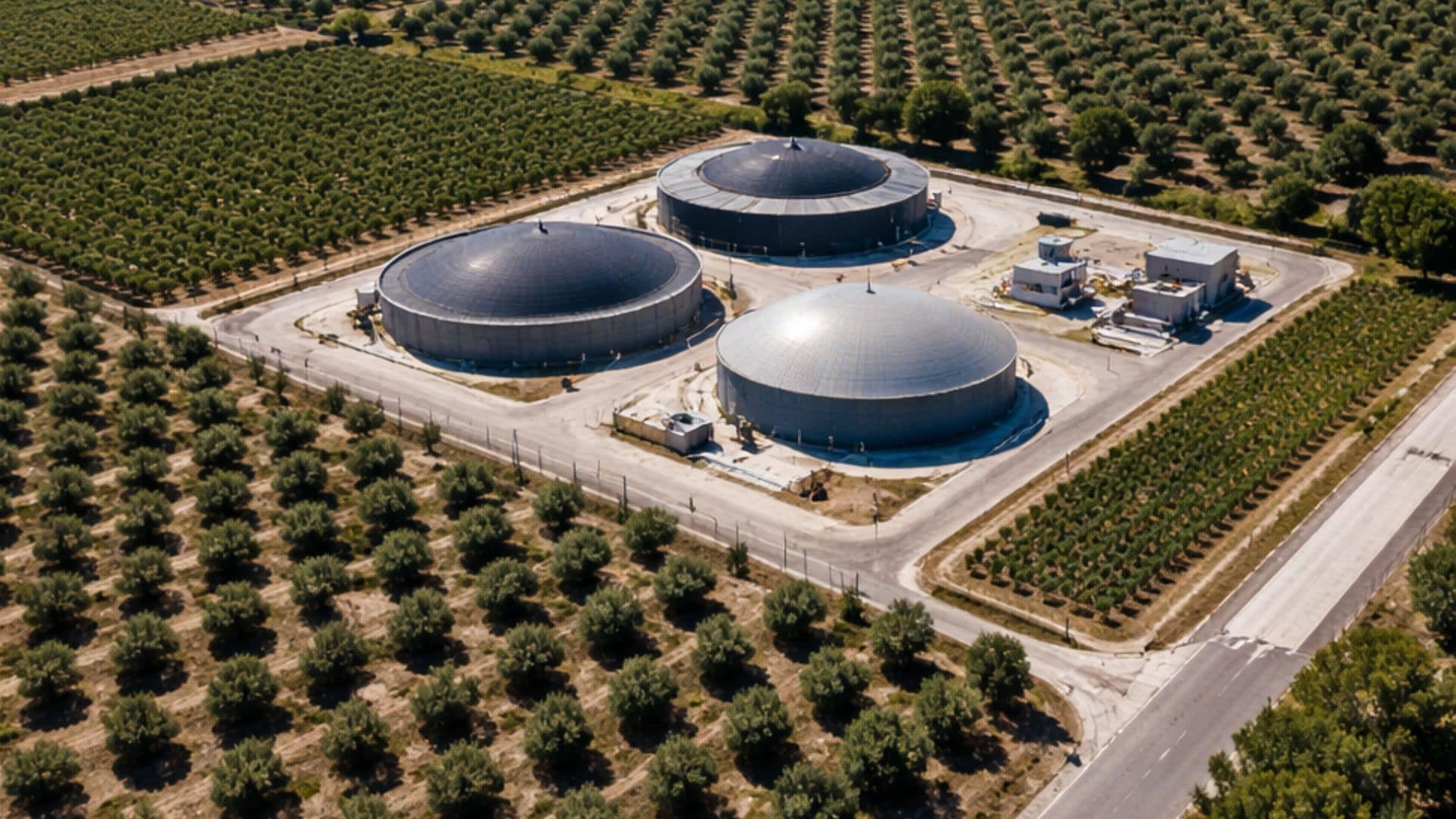
From Olive Waste to Renewable Energy
Anaerobic Digestion of Alperujo in Spain
Spain is the world’s largest producer of olive oil, generating millions of tonnes of olive-derived by-products each year. The anaerobic digestion of alperujo, the main semi-solid residue from the two-phase olive oil extraction process, is emerging as a strategic solution to manage this material while producing renewable energy.
Alperujo is composed of olive pulp, skin, stone fragments and vegetation water. Traditionally considered a waste management problem, it is now increasingly recognised as a valuable feedstock within the circular economy.
Turning Olive Oil Waste into Renewable Energy
Alperujo has a high organic content, making it particularly suitable for anaerobic digestion — a biological process in which microorganisms break down organic matter in the absence of oxygen.
This process produces:
Biogas, which can be upgraded to biomethane
Digestate, a nutrient-rich by-product that can be reused as fertiliser
Reduced greenhouse gas emissions
A more sustainable waste management model for the olive oil industry
Spain produces approximately 4–6 million tonnes of alperujo per year, depending on harvest conditions. Studies indicate that anaerobic digestion of olive mill waste can yield between 60–100 Nm³ of biogas per tonne, with methane content typically ranging from 50–65%, depending on process conditions and pretreatment strategies.
These figures highlight the significant renewable gas potential of the olive oil sector.
The anaerobic digestion of alperujo represents one of the most promising renewable gas pathways for agricultural regions in Spain.

Technical Challenges in the Anaerobic Digestion of Alperujo
The anaerobic digestion of alperujo presents specific technical challenges due to its composition.
Alperujo contains:
High lipid concentrations
Significant levels of phenolic compounds, which can inhibit microbial activity
Variable moisture content
Phenolic compounds in particular may reduce methane yields if not properly managed. For this reason, pretreatment processes are often required. These may include:
Mechanical homogenisation
Thermal or biological pretreatment
Co-digestion with other agricultural substrates
Dilution strategies to reduce inhibitory concentrations
Recent research and pilot projects have demonstrated that appropriate pretreatment and microbial adaptation strategies can significantly improve methane production efficiency and process stability.
Industrial Development of Anaerobic Digestion of Alperujo
Over the past decade, several research initiatives and pilot plants across Spain and Southern Europe have explored the industrial-scale anaerobic digestion of olive mill waste.
Publicly funded demonstration projects have shown that:
Stable digestion is achievable with controlled pretreatment
Co-digestion with livestock manure improves process robustness
Biomethane upgrading enables grid injection or industrial use
The increasing number of pilot installations has contributed to technological maturity, paving the way for commercial deployment in olive-producing regions.
Spain’s renewable gas roadmap identifies biomethane as a key contributor to decarbonisation targets. Dozens of new biomethane installations based on agro-industrial residues are expected in the coming years, particularly in southern Spain, reinforcing the strategic role of anaerobic digestion in rural energy transition.
Engineering at the Core of the Transition
The success of anaerobic digestion of alperujo projects relies on multidisciplinary engineering expertise, covering:
Process and project engineering
Planning and construction management
Mechanical, electrical and instrumentation systems
Biogas upgrading technologies
Operations, maintenance and commissioning
The development of renewable energy from olive oil by-products illustrates how engineering, sustainability and circular economy principles converge to generate tangible industrial and environmental impact.
At Spanish Engineers, we support international companies active in the conversion of waste into renewable energy across Europe and internationally. We help them structure and strengthen their engineering teams for the design, construction and operation of biomethane and energy recovery facilities, connecting these organisations with experienced engineering talent capable of delivering complex industrial projects with high environmental impact.
Sources
This article is based on publicly available institutional reports, scientific publications and industry references related to anaerobic digestion, olive oil by-products and renewable energy.
IEA Bioenergy – Task 37 (Energy from Biogas)
Technical reports on anaerobic digestion technologies, feedstock characteristics and biomethane upgrading.
https://www.ieabioenergy.comBioresource Technology (Elsevier)
Peer-reviewed research on anaerobic digestion of agro-industrial residues, including olive mill waste and alperujo.
https://www.sciencedirect.com/journal/bioresource-technologyRenewable Energy Journal (Elsevier)
Studies on biomethane production, process optimisation and environmental performance of anaerobic digestion systems.
https://www.sciencedirect.com/journal/renewable-energy
Ready for your next engineering project?
Our engineering recruitment and consultancy services support companies working on complex industrial and infrastructure projects internationally.
© Copyright 2021 – All Rights Reserved, Spanish Engineers