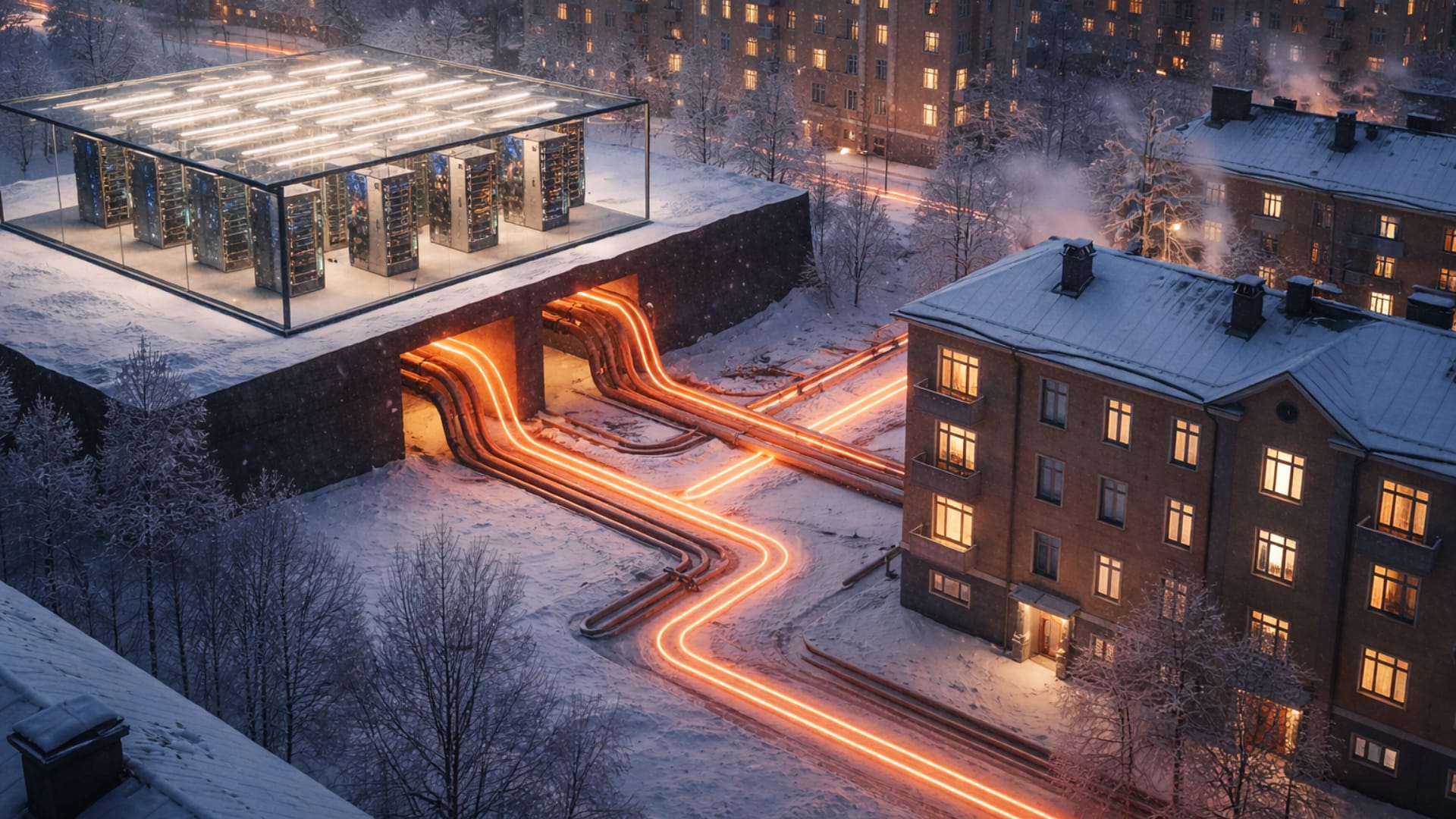
How Engineers Are Transforming Data Center Waste Heat into Sustainable Urban Energy
Data center waste heat recovery is becoming a critical strategic issue as digital infrastructure expands across Europe. While hyperscale data centers consume vast amounts of electricity, engineers are rethinking how data center waste heat can be recovered and integrated into district heating networks to reduce environmental impact and support sustainable urban energy systems.
Across the Nordic region in particular, waste heat recovery is transforming data centers from energy-intensive facilities into active contributors to the urban energy transition.
In this article
- Data Center Waste Heat: From Energy-Intensive infrastructures to Urban Energy Assets
- The growing energy challenge of hyperscale data centers
- Finland’s Pioneering Approach to Data Center Waste Heat Recovery
- European District Heating Initiatives Using Data Center Waste Heat
- Why the Nordic Region Leads in Sustainable Data Center Development
- Engineering the energy transition of digital infrastructure
- What this means for international industrial projects
- Conclusion
Data Center Waste Heat: from Energy-Intensive Infrastructures to Urban Energy Assets
Data centers are expanding rapidly worldwide, driven by cloud computing, digital services, and the explosive growth of artificial intelligence. While these facilities are critical to the modern economy, they also raise serious concerns: high electricity consumption, pressure on local grids, and a growing environmental footprint.
Yet across Europe, and especially in the Nordic region, engineers are demonstrating that hyperscale data centers do not have to remain pure energy consumers. Through innovative design, smart location choices, and integration with urban energy systems, waste heat from data centers is increasingly being transformed into a valuable resource for cities.
The growing energy challenge of hyperscale data centers
As digital services and artificial intelligence expand, the world’s largest data centers, known as hyperscale facilities, can consume as much electricity as a medium-sized city. Much of this power is still generated from fossil fuels, contributing to greenhouse gas emissions and climate change.
Global electricity demand from data centers is set to surge: Goldman Sachs estimates a 50% increase between 2023 and 2027, while the International Energy Agency projects a potential doubling by 2030.

This rapid growth makes designing energy-efficient, low-carbon facilities more urgent than ever. The key question is no longer whether data centers will continue to grow, but how engineers design, power, and integrate them into local energy systems to minimize environmental impact.
Finland’s Pioneering Approach to Data Center Waste Heat Recovery
Finland has emerged as a global reference for how engineering innovation can reduce the environmental impact of data centers.
Engineer Ari Kurvi first experimented with waste heat recovery in 2009 at a data center in Kuopio, selling excess heat back to the building’s landlord. Five years later, he scaled the concept at a Nebius Group facility, marking one of the first large-scale data center heat recovery projects in Finland and possibly worldwide. Today, the same system even heats his own home.
Operators like Nebius now recover around 20,000 MWh of waste heat per year, enough to heat approximately 2,500 homes through district heating networks.
The Microsoft–Fortum data center region in Espoo, near Helsinki, represents the most ambitious application yet. Once completed, the cluster is expected to supply around 40% of Espoo’s district heating needs, serving roughly 250,000 residents (about 100,000 homes). A local coal-fired heating plant has already been shut down as a direct result, showing how data centers can transition from energy consumers to contributors.
These examples demonstrate how engineers play a pivotal role in transforming waste heat into urban energy, optimizing infrastructure, and aligning industrial projects with sustainability goals. Waste heat recovery from hyperscale data centers is increasingly recognized as a strategic component of Europe’s energy transition. By connecting hyperscale data centers to district heating infrastructure, cities can reduce fossil fuel dependence, improve energy efficiency, and transform digital infrastructure into a stable urban energy asset.

European District Heating Initiatives Using Data Center Waste Heat
Beyond Finland, similar projects are underway across Europe. In Ireland, the Tallaght District Heating Scheme uses excess heat from an Amazon data center to save over 1,100 tons of CO₂ annually. In the UK, London plans to integrate heat from data centers into a district heating network capable of warming more than 9,000 homes. Sweden and other Nordic countries are also experimenting with heat recovery from industrial and transport infrastructure.
These initiatives illustrate that engineering solutions, district energy networks, and policy alignment can collectively turn potential environmental challenges into tangible urban benefits.
Why the Nordic Region Leads in Sustainable Data Center Development
Not all regions are equally suited to sustainable data center development. The Nordic countries have become a magnet for technology companies due to a unique combination of factors:
- Cold climate: Low ambient temperatures allow many data centers to use outside air for cooling, significantly reducing electricity consumption.
- Low-carbon electricity: Power grids dominated by hydroelectric, wind, and nuclear energy reduce the carbon intensity of operations.
- Competitive energy prices: Electricity costs in the region are among the lowest in Europe, improving long-term project viability.
- District energy infrastructure: Many towns and cities in Finland rely on district energy systems, where a central generation plant distributes steam or superheated water to individual buildings, campuses, or entire neighborhoods.
This last factor is particularly important. When combined with sustainable data center design and waste heat recovery systems, district heating networks create a highly efficient circular energy model capable of upgrading and distributing large volumes of recovered heat to residential and commercial buildings.
At Microsoft’s Espoo campus, lukewarm water from the data centers is transferred to a waste heat recovery facility equipped with dozens of heat pumps. These systems upgrade the heat to temperatures suitable for district heating, allowing data center operations to directly support residential and commercial heating needs.
Engineering the energy transition of digital infrastructure
These developments highlight the essential role engineers play in the energy transition of digital infrastructure. The ability to capture and reuse data center waste heat is becoming a defining feature of next-generation sustainable infrastructure projects. By combining expertise in electrical engineering, thermal systems, industrial design, and urban energy planning, engineers are enabling data centers to:
- Reduce overall energy consumption
- Lower carbon emissions
- Ease pressure on local power grids
- Support municipal climate objectives
While no data center is entirely free of environmental impact, projects that integrate waste heat recovery, district heating, and low-carbon electricity can significantly mitigate their downsides.
What this means for international industrial projects
As demand for data centers continues to rise globally, sustainable design is becoming a strategic requirement rather than a niche innovation. Governments, municipalities, and investors are increasingly evaluating projects based on their environmental performance, energy efficiency, and integration with local infrastructure.
This shift is creating strong demand for experienced engineers capable of designing and delivering complex, multidisciplinary projects at scale, particularly in regions where energy efficiency and climate targets are critical.
At Spanish Engineers, we support international companies developing industrial and infrastructure projects across Europe and beyond, including data centers and energy-intensive facilities. By connecting organizations with experienced engineering talent, we help ensure that growth in digital infrastructure aligns with long-term sustainability goals.
Conclusion
Europe’s experience shows that data centers do not have to remain isolated, energy-intensive facilities. When engineers integrate waste heat recovery, district heating infrastructure, and low-carbon electricity into project design, hyperscale data centers can evolve into active contributors to sustainable urban energy systems.
As digital demand accelerates, the engineering decisions made today will determine whether data centers increase environmental pressure or become strategic assets in the clean energy transition.
Work with experienced engineers on sustainable data center projects
As data centers and other energy-intensive facilities continue to expand, engineering expertise in waste heat recovery, district heating integration, and sustainable infrastructure design is essential to meet performance, reliability, and environmental targets.
At Spanish Engineers, we support international companies developing complex industrial and infrastructure projects across Europe and beyond. By connecting organizations with experienced engineering talent and consultancy expertise, we help ensure that sustainable data center growth aligns with long-term climate and energy objectives.
Learn more about our engineering and consultancy services or contact us to discuss your project needs.
Sources
This article is based on publicly available institutional reports, industry analysis and policy references related to data center energy demand, waste heat recovery, and district heating integration.
Sources
This article is based on publicly available industry reporting and institutional analysis related to data center energy demand, waste heat recovery, and district heating integration in Europe.
Bloomberg (May 14, 2025)
Finland’s Data Centers Are Heating Cities Too
Feature article detailing how hyperscale data centers in Finland integrate waste heat into district heating systems, including the Microsoft–Fortum project in Espoo.
https://www.bloomberg.com/news/features/2025-05-14/finland-s-data-centers-are-heating-cities-too
World Economic Forum (June 2025)
Sustainable Data Centre Heating: Turning Waste Heat into Urban Energy
Analysis of how data center waste heat recovery contributes to sustainable urban energy systems and decarbonisation strategies.
https://www.weforum.org/stories/2025/06/sustainable-data-centre-heating/?utm_source=chatgpt.com
Goldman Sachs Insights (2024–2025 Outlook)
AI to Drive 165% Increase in Data Center Power Demand by 2030
Research on projected electricity demand growth from hyperscale data centers and artificial intelligence infrastructure.
https://www.goldmansachs.com/insights/articles/ai-to-drive-165-increase-in-data-center-power-demand-by-2030
Contact us
Our mission is to help international companies hire qualified professionals for projects in Spain and abroad.
- +34-611 694 000
- +34-611 694 000
- info@spanish-engineers.com
- Follow us and stay updated

© Copyright 2021 – All Rights Reserved, Spanish Engineers